Health and Safety Policy for Landscaping Euston
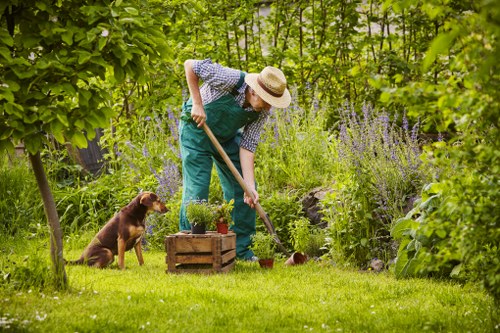 This health and safety policy sets out the standards and responsibilities that support safe, consistent, and professional landscaping operations in Euston. It applies to all outdoor work activities, including planting, turf care, pruning, maintenance, site preparation, and the use of tools, machinery, and vehicles. The aim is to protect workers, clients, visitors, and members of the public from avoidable harm while delivering high-quality landscaping in Euston.
Our commitment is based on prevention, awareness, and careful planning. Every task must be assessed before work begins, with attention to hazards such as uneven ground, moving machinery, sharp implements, noise, manual handling, weather conditions, and exposure to chemicals or dust. All staff are expected to follow safe working practices and to stop work if conditions become unsafe.
 This policy also supports a culture of responsibility. Managers, supervisors, and operatives each have a role in maintaining safe systems of work. Safety is not treated as an optional extra; it is an essential part of landscaping service delivery and daily decision-making.
Risk assessment is central to every project. Before starting any landscaping Euston task, the site should be reviewed for hazards and the control measures recorded where needed. This includes identifying access issues, underground services, public interface, traffic movement, and the presence of children, pets, or other vulnerable persons. Where conditions change, the assessment must be updated.
Safe methods of work should be selected for each task. For example, lifting should be done with correct technique or mechanical support when possible; cutting equipment should be used only by trained personnel; and work at height should be avoided unless it is necessary and properly controlled. Equipment must always be suitable, inspected, and used in line with manufacturer instructions.
 Personal protective equipment, or PPE, must be worn when required. Typical items may include gloves, eye protection, safety footwear, hearing protection, hi-vis clothing, and weather-appropriate outerwear. PPE does not replace other safety measures, but it provides an important additional barrier against injury during landscaping operations.
Training and supervision are key parts of the policy. Employees must receive instruction on safe use of tools, manual handling, hazard recognition, emergency action, and the correct handling of plants, fuels, and substances. New workers or temporary staff should be closely supervised until they can carry out work safely and competently.
Machinery and hand tools must be maintained in good condition. Damaged equipment should be removed from service immediately and reported. Guards, blades, cords, switches, and fuel systems should be checked regularly. Good housekeeping is also essential: pathways should be kept clear, waste should be removed promptly, and materials should be stored so they do not create tripping or fire risks.
Plant, soil products, fertilisers, and other substances must be handled carefully. Staff should read labels, follow instructions, and avoid unnecessary exposure. If a task involves dust, spray, or potentially harmful contact, suitable controls must be applied. Safe storage and correct disposal are required to prevent environmental damage and reduce risk to people working on or near the site.
Emergency procedures must be understood by everyone on site. First aid arrangements should be suitable for the size and nature of the work, and all staff should know how to report accidents, near misses, and unsafe conditions. In the event of injury, fire, spill, collapse, or severe weather, work must stop and the area secured until it is safe to continue.
Communication is vital when working in shared or public environments. Barriers, signs, and clear instructions should be used where needed to separate work areas from pedestrian routes and to warn of temporary hazards. The team should remain alert to changes in site conditions, especially when operating around driveways, entrances, narrow access points, or live traffic.
 Weather can strongly affect landscaping safety. Rain, heat, wind, frost, and low visibility can make surfaces slippery, increase fatigue, or reduce control of machinery. Work plans should account for the forecast and the condition of the ground. If the weather creates an unacceptable risk, tasks should be postponed or adapted. Safety must always take priority over speed.
 This policy is reviewed regularly to keep it effective and up to date. Reviews should consider incidents, equipment changes, new work practices, training needs, and feedback from inspections or audits. Where improvements are identified, they should be implemented promptly and communicated clearly to the team.
All personnel are expected to support this policy by working responsibly, using equipment correctly, reporting hazards quickly, and respecting safe working boundaries. By maintaining these standards, landscaping in Euston can be carried out efficiently while protecting people, property, and the quality of the working environment.
In summary, this health and safety policy provides a practical framework for safe landscaping operations. It promotes planning, training, supervision, equipment care, and continuous improvement so that every project is completed with professionalism and due regard for wellbeing.